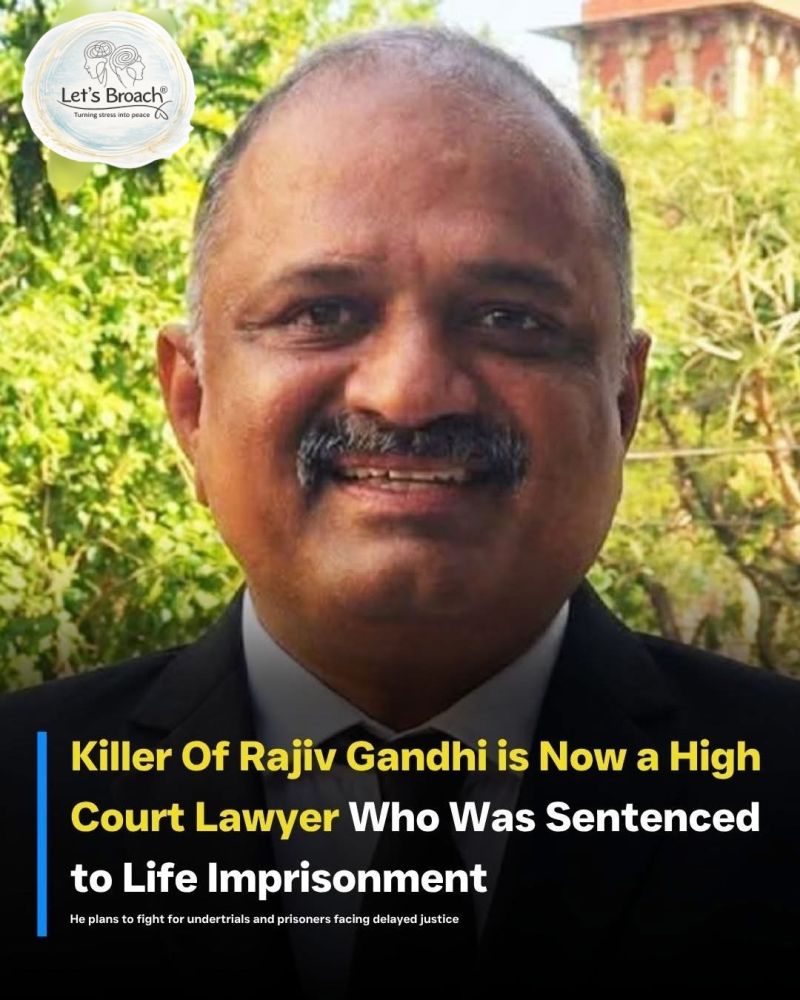
Early in the morning, I read this news and my first reaction to it was, how is this even acceptable? Where’s the justice?
The news spoke about A. G. Perarivalan; once convicted in the Assassination of Rajiv Gandhi, spending over 30 years in prison, released in 2022 following a decision by the Supreme Court of India due to extraordinary delays… and now beginning a new chapter as a lawyer.
That contrast stayed with me.
But after sitting with this thought for a while, I realised something deeper, we are not just reacting to the news, we are reacting from our own inner need for justice.
So let me break this down the way our mind actually processes it:
1. The Emotional Lens (what we feel)
For many, especially those connected to the loss, this can never feel enough. Psychologically, this is because our mind seeks felt fairness.
We carry something called a “just-world belief” the need to believe that wrongs will be proportionately corrected. When that doesn’t happen, it creates inner resistance:
“This shouldn’t be like this.”
And that discomfort doesn’t resolve easily.
2. The Legal Lens (what is decided)
The court’s decision was not about simple innocence or guilt.
It was about process: long delays, constitutional rights, and what is legally fair after decades.
But here’s the psychological gap:
Legal closure does not automatically create emotional closure.
And this is where people feel stuck
because the mind is not looking for procedure, it is looking for meaning and balance.
3. The Reform Lens (what is possible)
There is also a belief in rehabilitation that after decades, a person can rebuild life. But emotionally, this creates conflict inside us.
Because two truths exist together:
– Something irreversible happened
– And yet, life is moving forward for someone involved
The mind struggles to hold both at once. And this is not just about this one incident. This is how we experience justice in our own lives too.
In relationships…
At work…
Within families…
We wait for:
– an apology
– an acknowledgement
– a consequence
Because somewhere, we are trying to restore that same sense of fairness.
But here is the uncomfortable psychological truth: External justice and internal peace do not always arrive together. And when we keep waiting for the outside world to “correct” things, we remain emotionally tied to moments that may never resolve the way we want.
So after sitting with my initial reaction, I came to this conclusion: Not every situation will give us the justice we are looking for. But we still have a choice in how long we stay bound to that expectation. This is not about accepting wrongs. It is about not losing ourselves while waiting for them to be corrected.
Sometimes, healing begins when we stop waiting for life to feel fair…
and start deciding how we want to move forward, even when it doesn’t.
hashtag#letsbroach hashtag#youremotionalwellnesspartnerActivate to view larger image,