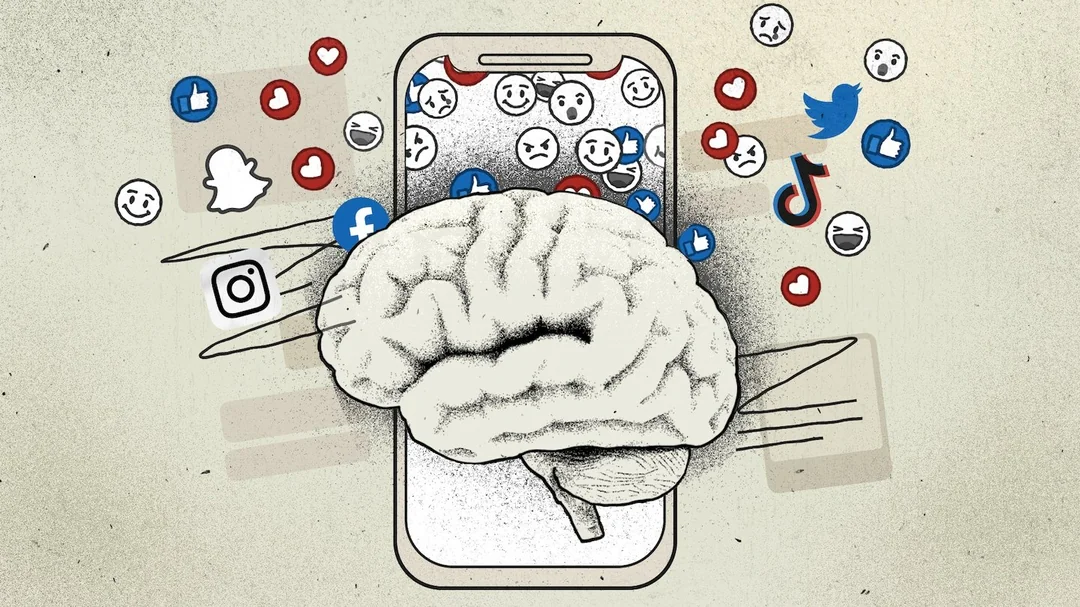
This was the case in the era before digital revolution as well but we tend to suffer from it more noticeably now. In today’s digital age, we are constantly bombarded with information and content vying for our attention. We carefully curate our social media feeds to reflect our interests and preferences. But what happens when this digital landscape becomes repetitive and dull? This phenomenon, known as social media fatigue, has psychological roots that we experience more often now and to combat the boredom we need to understand and reinvigorate our online experience.
Our brains are naturally inclined to crave new experiences, and this tendency is largely driven by the neurotransmitter dopamine. Dopamine plays a crucial role in our brain’s reward and motivation systems. Imagine dopamine as a tiny chemical messenger that delivers the sensation of pleasure when we encounter something novel or exciting. This pleasurable feeling acts as a signal, encouraging us to seek out more of these new experiences.
This process is often referred to as the “dopamine loop.” It’s an evolutionary mechanism that has been deeply ingrained in us over time. For our ancestors, discovering something new, like a fresh source of food or a safer place to live, was vital for survival. The release of dopamine would reward them for these discoveries, motivating them to continue exploring and finding new resources.
In essence, the dopamine loop is nature’s way of keeping us curious and engaged, constantly pushing us to explore and experience new things. Our brain’s dopamine system ensures that we are always on the lookout for fresh and stimulating experiences. This drive for novelty extends beyond basic needs to our quest for new information and experiences. The excitement of the unknown triggers our dopamine circuits, providing a pleasurable jolt that reinforces our curiosity. For example:
- Anticipating a new restaurant with unfamiliar flavors can trigger dopamine, driving us to try it.
- The excitement of a first date with its unknown possibilities can create a potent dopamine rush.
- Planning a trip to a new destination ignites our curiosity and fuels our desire for adventure.
While our brains crave novelty, they also have a remarkable ability to adapt to familiar stimuli, a process known as habituation. Habituation helps us filter out irrelevant information and focus on what’s important. For example, we might tune out the constant hum of a refrigerator or the background noise of traffic.
However, habituation can also lead to boredom. As we get used to a stimulus, its novelty fades, and its ability to elicit a dopamine response diminishes. This can make previously exciting experiences feel dull and uninteresting. For example:
- A favorite song becoming tiresome after repeated listens.
- A meal that was once a craving losing its appeal after several visits to the same restaurant.
- A social media feed that initially captivated our attention starting to feel repetitive and dull.
Social media platforms are cleverly designed to keep us glued to our screens by continually showing us content tailored to our previous likes, clicks, and shares. Think of it as a personalized feed that seems to know exactly what we want to see. While this can be exciting at first, it often leads to the phenomenon habituation.
Imagine scrolling through your feed and noticing that the posts and videos start to feel eerily similar. This predictability can make the content less exciting and more monotonous. The reason behind this is that our brains have a natural craving for novelty—we are wired to seek out new and interesting experiences. When the same types of content keep popping up, our brain starts to adapt and becomes less stimulated by it.
This cycle is like watching a favorite movie too many times; the first few views are thrilling, but eventually, the excitement wears off. The boredom we experience is our brain’s way of signaling that it’s time to find something new and engaging. Social media, with its repetitive and familiar content, often struggles to meet our brain’s constant demand for novelty, leading to that feeling of fatigue and disengagement.
TikTok in India
TikTok became immensely popular in India, especially among the younger demographic. The platform’s algorithm was adept at presenting users with a constant stream of engaging, short-form videos tailored to their interests, leading to high levels of engagement.
When TikTok was first introduced, Indian users were drawn to its novel format and the opportunity to create and consume entertaining content. The dopamine loop was in full effect, with users experiencing frequent surges of pleasure and motivation to keep using the app.
A college student, Sriya, found herself spending hours each day on TikTok, drawn in by the endless variety of videos and the thrill of creating her own content. The novelty of new challenges, trends, and creative expressions kept her hooked.
Over time, however, the novelty began to wear off. The repetitive nature of the content and the algorithms’ tendency to show similar types of videos led to a decrease in user engagement.
After several months, Sriya noticed that her feed felt monotonous. The same types of dance challenges and lip-sync videos started to feel predictable and less exciting. Her initial excitement waned, and she found herself using the app less frequently.
The Indian government’s decision to ban TikTok in 2020 due to data privacy concerns and geopolitical tensions further highlighted the phenomenon of social media fatigue. Users who had already begun to experience a decline in their engagement with the platform found themselves abruptly cut off, prompting them to seek out new digital experiences.
Post-ban, Sriya turned to Instagram Reels and YouTube Shorts for her dose of short-form video content. The transition offered a fresh start and new algorithms to explore, temporarily reigniting her interest.
Facebook Usage Among Indian Millennials
Facebook was once the dominant social media platform in India, with millions of users engaging daily. However, in recent years, there has been a noticeable decline in its popularity among younger users, particularly millennials and Gen Z.
Initially, Facebook offered a novel way to connect with friends, share updates, and consume a variety of content. The platform’s features, such as status updates, photo sharing, and event invitations, were new and exciting.
An IT professional, Rahul, was an avid Facebook user during his college years. He used the platform to keep in touch with friends, share photos, and engage in lively discussions in groups and on pages.
As the platform evolved, the feed became cluttered with ads, repetitive content, and less relevant updates. The algorithm, designed to keep users engaged, often showed similar types of posts, leading to a sense of monotony.
Over time, Rahul found his Facebook feed filled with political debates, memes, and advertisements. The novelty of reconnecting with old friends and sharing life updates wore off, and the constant barrage of familiar content led to disengagement.
As a result of this habituation, many millennials in India have shifted their social media usage to platforms like Instagram, Snapchat, and Twitter, seeking new and diverse experiences.
Rahul started spending more time on Instagram, attracted by its visually rich content and the ability to follow interests and influencers outside his immediate social circle. The shift offered a break from the repetitive nature of his Facebook feed.
In recent years, there has been a growing awareness in India about the negative impacts of excessive social media use, leading to various “digital detox” movements. These movements encourage users to take breaks from social media to improve mental health and well-being.
When social media platforms like Instagram and Twitter first gained popularity, users were eager to join and explore the new digital landscape. The platforms offered new ways to share experiences, stay informed, and connect with others.
Meera, a marketing professional, was an enthusiastic user of Instagram. She enjoyed sharing her travel photos and engaging with content from influencers and brands. The platform’s novel features, such as Stories and IGTV, kept her engaged.
Over time, Meera began to feel overwhelmed by the constant stream of content and the pressure to maintain a curated online persona. The novelty wore off, and the repetitive nature of the content led to social media fatigue.
Meera noticed that her Instagram feed was becoming predictable, with similar types of posts from the accounts she followed. The pressure to keep up with trends and the fear of missing out (FOMO) contributed to her feelings of fatigue. Meera decided to join a digital detox movement, taking a break from social media to focus on offline activities and self-care. This break helped her regain a sense of balance and mental clarity.
During her digital detox, Meera spent more time reading, hiking, and engaging in face-to-face interactions. The break from social media allowed her to reflect on her usage patterns and set healthier boundaries when she returned to the platforms.
The boredom that arises from the constant exposure to familiar content on social media is a common experience, but it is not an inevitable consequence of online engagement. By understanding the underlying psychological mechanisms at play, we can take steps to combat the feeling of staleness and re-energize our online interactions.
1. Embrace the Unknown: Explore New Content and Perspectives
Actively seek out new accounts and topics that challenge your existing perspectives and expose you to unfamiliar ideas. Diversify your social media feed by following accounts that offer diverse viewpoints, explore different areas of interest, and engage with content that is outside of your comfort zone.
- If your feed is predominantly filled with fashion and beauty content, try following accounts that focus on science, history, or social justice.
- If you primarily engage with news sources that align with your political beliefs, explore alternative perspectives and news outlets that challenge your assumptions.
- If you follow primarily influencers and celebrities, try following accounts that showcase the work of artists, writers, or entrepreneurs who inspire you.
2. Curate Your Feed Consciously: Detach from Content That No Longer Serves You
Regularly review your social media feeds and identify accounts or topics that are no longer engaging you. Unfollow or mute accounts that provide repetitive content, spark negative emotions, or contribute to a sense of boredom.
- If you find yourself constantly scrolling past the same type of influencer content without engaging, consider unfollowing or muting those accounts.
- If you discover that a particular news source consistently creates anxiety and negativity, consider unfollowing or muting it, opting for alternative sources that provide more balanced and constructive coverage.
- If you find yourself scrolling through your feed without feeling inspired or motivated, take a step back and consider what kind of content you want to be exposed to.
3. Embrace the Power of Unplugging: Create Space for Reflection and Renewal
Take regular breaks from social media to engage in activities that nourish your mind and spirit. This could involve spending time in nature.