
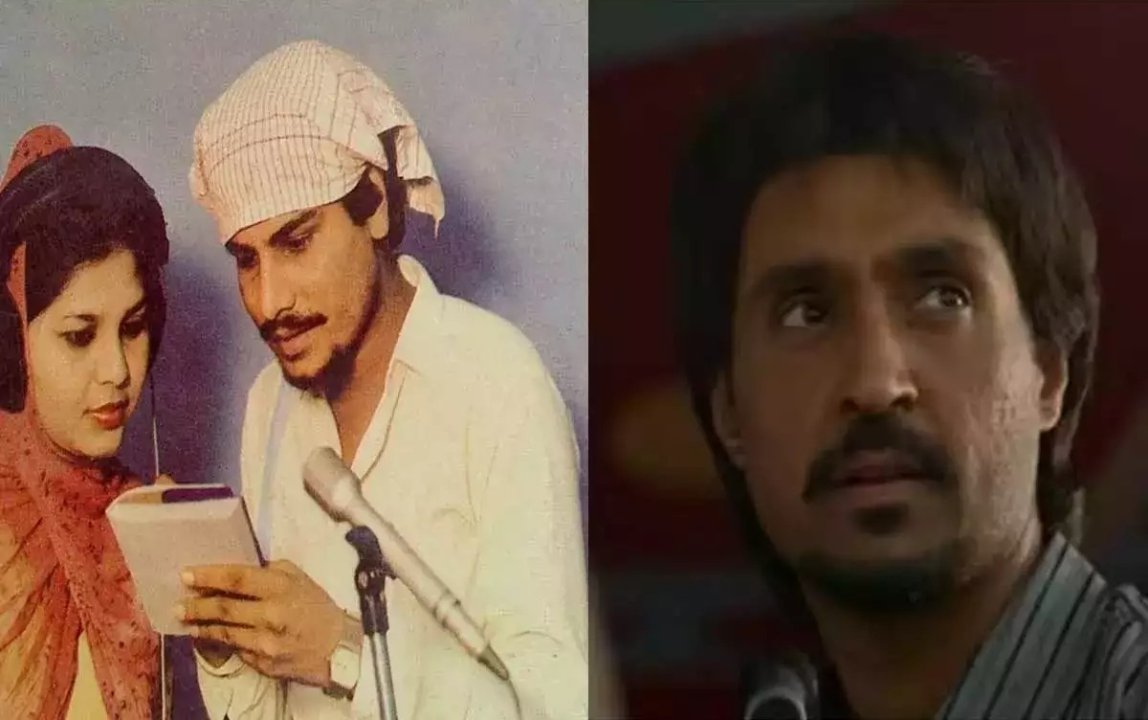
No! No! I am not a movie critic, but this was something which pushed me to gather my thoughts and frame them. In the quiet hours of a lazy weekend, I found myself unexpectedly drawn into the world of “Amar Singh Chamkila,” a film that spoke to me in profound ways about the nature of admiration, support, and human relationships. While I’m not typically someone to delve deeply into movies or television, this experience left a lasting imprint on my thoughts, prompting me to reflect on the dynamics of appreciation and the often-elusive notion of true bond. On this planet where we have such countless dynamics of human relationships, the equation of support and appreciation often intertwine in complex and sometimes confounding ways. The charm of recognition and admiration can create an illusion of solidarity, yet beneath the surface lies a deeper question: who among our admirers will truly stand by us when tested by the moral complexities of life?
The recent film “Amar Singh Chamkila” is a thought-provoking catalyst for exploring this complexity. Set against a backdrop of artistic brilliance and societal pressures, the narrative underscores a fundamental human dilemma: the distinction between genuine support and mere appreciation.
The focus of this discussion lies in the compelling notion that admiration does not necessarily translate into steadfast support. We encounter individuals who are captivated by our talents, who revel in our skills and creativity, and who are quick to applaud our achievements. Yet, the question lingers: do these admirers constitute a reliable source of support when confronted with adversity?
Human psychology often propels us into assuming that those who admire us will inevitably stand by us in times of need. This assumption is grounded in a fundamental human desire for validation and acceptance. However, the reality can be starkly different. Those who relish our abilities may not necessarily share our values or principles when faced with ethical dilemmas.
The characters in the film—Chamkila’s audience, his acquaintances—became emblematic of a broader truth about human relationships. These were individuals who loved Chamkila’s performances, who delighted in his wit and charm. They were present in moments of artistic brilliance, their applause a symphony of fleeting camaraderie.
Acquaintances, or those who appreciate our talents, often occupy a precarious space in our social orbit. They provide validation and enjoyment but lack the depth of commitment that defines genuine support.
As I reflected on these portrayals, I couldn’t help but draw parallels to my own life. How often had I found myself surrounded by admirers, by individuals who appreciated certain facets of who I am? The film invited me to confront the inherent shortness of these connections—to recognize that acquaintanceship built on admiration is but a fragile thread, easily frayed when tested by the weight of life’s complexities. In the film, Chamkila’s admirers relish his artistic prowess and revel in his performances. They constitute a sincere audience, celebrating his craft and embodying a transient form of camaraderie. However, when Chamkila encounters societal opposition and faces critical junctures that demand ethical resolve, these acquaintances reveal their limitations.
What sets apart true support from fleeting admiration? This question stayed in my thoughts long after the film had ended. True support, I realized, transcends the superficial allure of talent or charisma. It finds its roots in shared values, in a resonance of principles and convictions that anchor relationships during turbulent times.The spectrum of support extends beyond admiration and enjoyment. Genuine support emerges from a shared alignment of values, principles, and moral convictions. It transcends the momentary charm of talent and delves into empathy and solidarity.
We confront the sobering reality that not all who appreciate us are equipped to stand by us during life’s trials. The narrative invites us to recalibrate our understanding of human connections, highlighting the importance of being able to distinguish among the many forms of admiration.
As I thought more about the film, I found myself caught with the vulnerability that accompanies genuine connection. True support, I realized, demands vulnerability—the willingness to reveal our authentic selves and to stand by those whose values resonate with our own. Chamkila’s story embodied this vulnerability, his artistic brilliance compared against the societal pressures that ultimately led to his tragic demise. It was a stark reminder that vulnerability is not weakness but rather the foundation of genuine relationships—relationships that withstand the tests of time and circumstance.
The lessons picked from “Amar Singh Chamkila” extended beyond mere reflection; they invited a recalibration of my approach to human relationships. Discernment, I realized, is essential in navigating the paradox of admiration, in distinguishing between transient acquaintanceship and enduring solidarity.
Through Chamkila’s story, I resolved to cultivate connections grounded in shared values and ethical alignment. I sought out relationships that transcended the charm of acclaim, embracing those who stand by me not merely in moments of celebration but also in the crucible of moral integrity.
The film serves as a reminder to navigate the complexities of admiration and support with wisdom and discernment.
I am reminded that true allegiance is forged not in the applause of the crowd but in the quiet moments of shared conviction and mutual understanding. May we all embrace the vulnerability of genuine connection, forging bonds that endure the tests of time and adversity.